
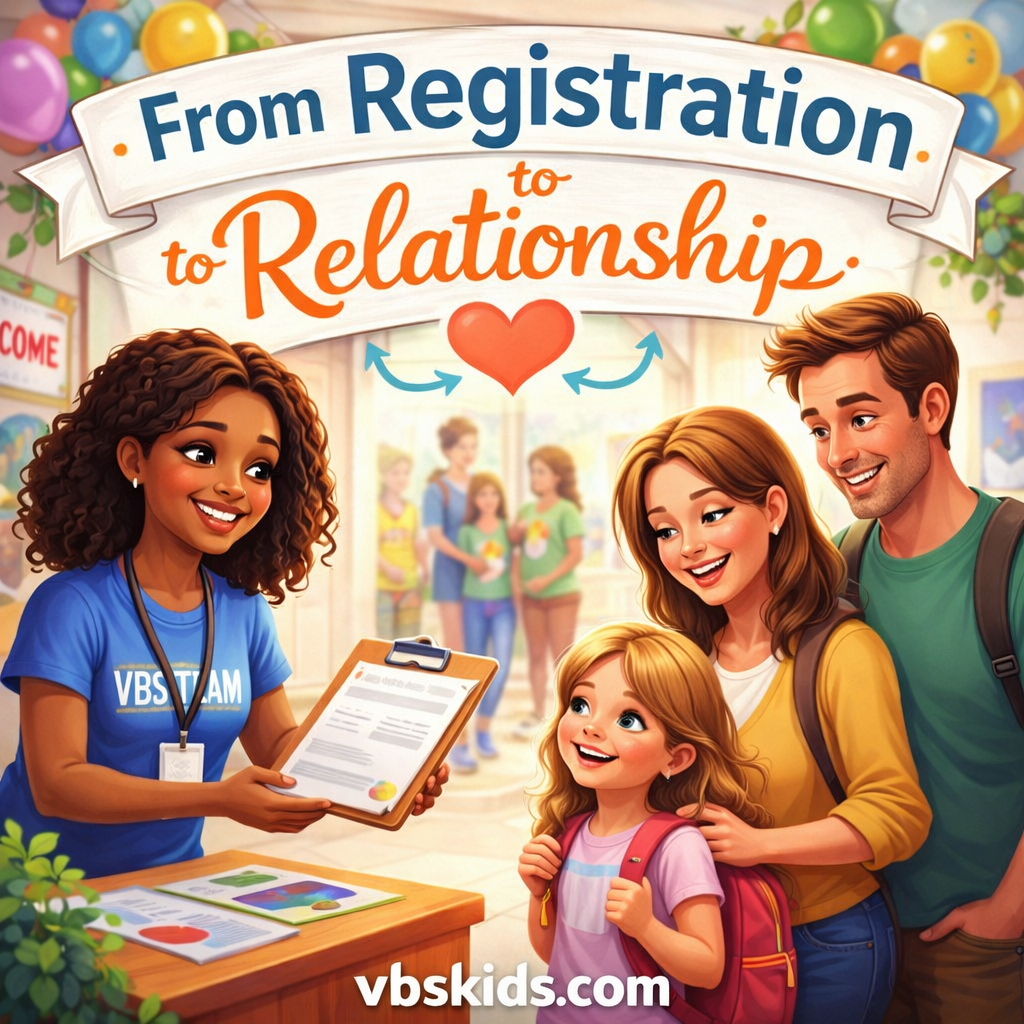
Vacation Bible School is often a child’s first sustained exposure to the life of a church—and a parent’s first extended moment of trust. While most VBS conversations focus on themes, crafts, volunteers, and schedules, far fewer address a quieter but decisive factor: the first-time family experience.
This experience begins long before the opening song and continues well after the last pickup line. It shapes whether families feel relief or resistance, curiosity or caution, connection or confusion. In many cases, it determines whether VBS becomes a one-week memory or the beginning of a long-term relationship with a church community.
From a ministry and publishing perspective, this is not a “soft” issue. It is an operational, pastoral, and ethical one.
Why First-Time Family Experience Is the New VBS Frontier
Churches are increasingly serving families who have little to no church background. Many parents enrolling their children in VBS are not evaluating theology; they are evaluating trustworthiness. They are asking questions such as:
- Will my child be safe here?
- Will I be judged?
- Will this place respect my time, values, and boundaries?
- Will I be pressured into commitments I didn’t ask for?
These questions are rarely verbalized, but they are constantly answered—through systems, communication, signage, tone, and follow-through.
Scripture reminds us that faith formation is deeply relational:
“Love each other with genuine affection, and take delight in honoring each other.” — Romans 12:10 (NLT)
Honor, in this context, is communicated through thoughtful design.
The Hidden Cost of a Poor First Impression
Most churches unintentionally design VBS around insiders. Language assumes familiarity. Processes assume prior knowledge. Expectations are rarely explained because “everyone already knows how this works.”
But for first-time families, this creates friction at nearly every step:
- Registration forms that feel intrusive or confusing
- Drop-off processes that feel rushed or unclear
- Pickup procedures that raise safety questions
- Follow-up communication that is either overwhelming or nonexistent
None of this reflects a lack of care. It reflects a lack of intentional design.
Reframing VBS Through the Lens of Hospitality
Biblical hospitality is not simply friendliness; it is foresight.
“Don’t forget to show hospitality to strangers, for some who have done this have entertained angels without realizing it.” — Hebrews 13:2 (NLT)
Hospitality anticipates needs before they are expressed. When applied to VBS, it asks not, “What do we need to run this program?” but “What does a first-time family need to feel safe, respected, and informed?”
This reframing changes everything.
Phase 1: Pre-VBS — Reducing Anxiety Before Arrival
For first-time families, the emotional high point of VBS often happens before day one—during registration. This is where trust is either built or eroded.
Effective churches do three things well at this stage:
1. Explain the “Why” Behind the Information Requested
Families are far more willing to share information when they understand how it will be used. Clarity communicates respect.
2. Describe the Daily Flow in Plain Language
Avoid insider terms. Parents want to know where their child will be, who will supervise them, and how transitions work.
3. Set Expectations Clearly and Calmly
Drop-off times, pickup procedures, snack policies, and contact protocols should feel reassuring, not restrictive.
“Let all things be done decently and in order.” — 1 Corinthians 14:40 (NLT)
Order reduces anxiety. Anxiety is the enemy of openness.
Phase 2: During VBS — Designing for Parents, Not Just Kids
While children are the participants, parents are the decision-makers. Their experience often unfolds in small, overlooked moments.
Key design considerations include:
Visible Safety Practices
Check-in systems, name tags, and clear staff identification communicate competence without needing explanation.
Warm but Non-Intrusive Communication
Friendly does not mean forceful. Staff should be trained to assist, not interrogate.
Predictable Pickup Experiences
The end of the day is when parental anxiety spikes. Smooth, well-communicated pickup processes leave a lasting impression.
“For God is not a God of disorder but of peace.” — 1 Corinthians 14:33 (NLT)
Peace is a powerful witness.
Phase 3: Post-VBS — Turning Gratitude into Trust
After VBS ends, families quietly assess whether their expectations were met. This is the most underutilized moment in the entire VBS lifecycle.
Effective post-VBS communication does not attempt to capitalize on emotion. Instead, it practices gratitude and restraint.
Healthy follow-up includes:
- A genuine thank-you, not a promotional pitch
- A brief summary of what children experienced
- One optional, clearly explained next step
“Let your roots grow down into him, and let your lives be built on him.” — Colossians 2:7 (NLT)
Roots grow slowly. Trust grows the same way.
Ethical Boundaries That Matter More Than Ever
From an ethical publishing and ministry standpoint, first-time family engagement must avoid:
- Implied obligations
- Emotional leverage using children’s spiritual responses
- Inflated language about impact or outcomes
- Unverifiable testimonials
Parents are not prospects. They are stewards of their children.
“A good name is more desirable than great riches.” — Proverbs 22:1 (NLT)
Trust, once lost, is rarely regained.
Measuring Success Beyond Attendance
Churches often measure VBS success by numbers: registrations, volunteers, salvations, attendance spikes. While these metrics have value, they do not tell the whole story.
More meaningful indicators include:
- Families returning voluntarily
- Parents initiating conversations
- Volunteers expressing renewed purpose rather than burnout
- Children referencing VBS lessons weeks later
“You will know them by their fruits.” — Matthew 7:16 (NLT)
Fruit takes time to appear.
Why This Approach Is Increasingly Essential
Cultural trust in institutions is declining. Churches are not exempt. First-time family experiences are no longer peripheral; they are foundational.
VBS remains one of the most accessible on-ramps to church life. But accessibility without intentional design can unintentionally alienate the very families churches hope to reach.
A well-designed first-time family experience does not dilute the gospel. It removes unnecessary barriers to hearing it.
“I have become all things to all people so that by all possible means I might save some.” — 1 Corinthians 9:22 (NLT)
Looking Ahead: From Program Excellence to Relational Clarity
The future of effective VBS ministry lies not in bigger themes or more complex programming, but in clarity, care, and continuity.
When churches design VBS with first-time families in mind, they are not just running a better program—they are practicing faithful stewardship of trust.
And trust, once earned, opens doors no marketing strategy ever could.