
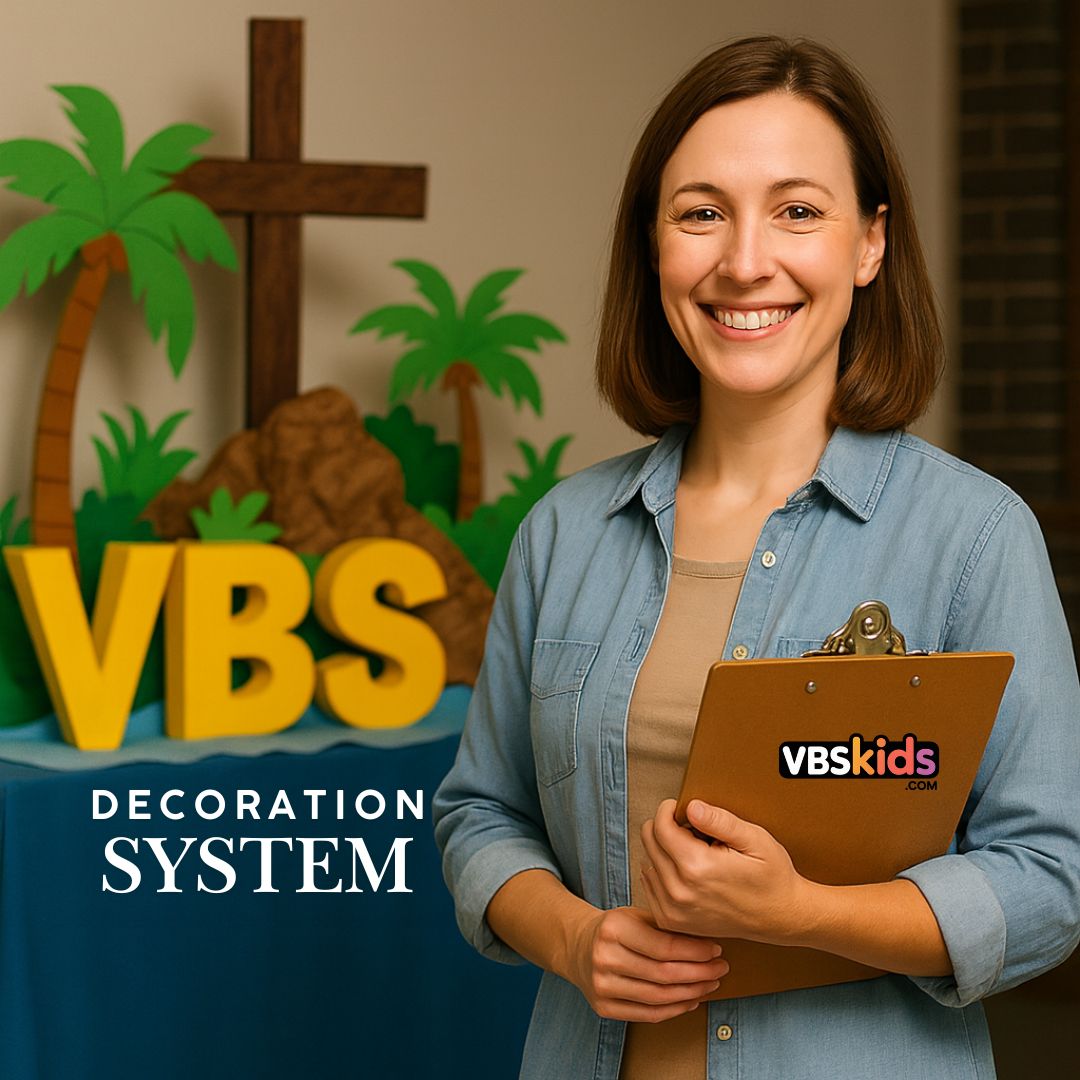
Every year, churches across the country enter the same exhilarating—and exhausting—ritual: preparing for Vacation Bible School. Directors juggle theme ideas, volunteer schedules, registration logistics, curriculum, and of course… decorations. For many, decorating becomes the turning point where excitement gives way to overwhelm. You start with fresh enthusiasm and a Pinterest board, but somewhere around midnight—surrounded by half-cut cardboard, tangled fishing line, and a glue gun losing its will to live—you wonder why you ever said yes to leading VBS in the first place.
If this sounds familiar, you’re not alone. Decorating is often the most underestimated component of VBS. Directors assume it’s “just arts and crafts,” but it is actually one of the most visible elements of the entire week—setting atmosphere, reinforcing message, and communicating excellence to families. And because it’s visible, many directors pour far too much time, energy, and budget into decoration at the cost of planning, volunteers, and ministry impact.
But what if VBS decorating didn’t have to be frantic?
What if it wasn’t a last-minute scramble?
What if it actually became one of your most strategic tools—not a stress point, but a system that brings clarity, unity, and excitement?
That is the purpose of The VBS Decoration System—a three-pillar strategic framework I’ve refined through years of VBS leadership. It helps directors move from reaction to intentionality, from burnout to empowerment, and from cluttered creativity to focused, high-impact visual storytelling.
This system does not require artistic skill, a huge budget, or a team of professional builders. It simply requires thoughtful planning, resource stewardship, and purposeful delegation. When applied, these pillars don’t just make decorating easier; they transform the way your team experiences VBS.
Let’s walk through each pillar and see how they work together to save you time, protect your volunteers, stretch your budget, and elevate the visual excellence of your ministry.
**Pillar 1: Vision & Master Planning
(The Blueprint That Directs Every Decoration)**
Before you buy a single roll of butcher paper or cut a single piece of cardboard, you must start with your vision. Most directors skip straight to décor—shopping, scrolling, crafting—without pausing to define the purpose behind the decoration itself.
The Strategy: Every decoration must serve your theme and your message.
Your decorations are not random props. They are part of your storytelling. They set atmosphere, anchor memory, and shape emotional experience. When done well, they reinforce the teaching goals of your VBS theme.
A jungle theme isn’t just vines and leaves—it’s a sense of adventure.
An ocean theme isn’t just waves—it’s depth, mystery, and exploration.
A space theme isn’t just stars—it’s discovery, imagination, and awe.
Your decorations should extend your message, not distract from it.
Step 1: Define Your Priority Tiers
Not all spaces are created equal. Yet many directors treat every hallway, classroom, and surface with equal intensity—leading to burnout and wasted energy.
Your church building already has natural focal points. Use them.
Tier 1: Wow Zones (60% of your effort and budget)
These are the places every child and parent will see:
- Main stage
- Worship area
- Registration area
- Welcome foyer
These locations deliver the most visual impact per minute of labor invested.
Tier 2: Rotation & Classroom Zones (30%)
These spaces support the theme but don’t need overwhelming detail:
- Craft room
- Snack area
- Bible lesson rooms
- Game or rotation stations
Think simple, repeatable visual cues: backdrop panels, color themes, or a single bold prop.
Tier 3: Hallways & Transitions (10%)
The goal here is consistency, not complexity:
- Posters every 10–15 feet
- Themed banners
- Color splashes
Do not waste time on hallway over-decorating. It is the #1 volunteer burnout trap.
Step 2: Cast a Unified Visual Vision
If you’ve ever had a volunteer team go creatively rogue—producing rooms that look like they belong to entirely different VBS themes—you understand the value of shared vision.
Create a simple mood board:
- A Pinterest folder
- A Google Drive of inspiration images
- A 1-page theme style sheet
- A color palette and sample props
Share this with your volunteer team early. When everyone sees the same examples, you eliminate creative drift and guarantee consistency.
Step 3: Start Eight Months Early
This is not about working eight months straight—it’s about spreading the work so your team never feels overwhelmed.
Why this timeline matters:
- You gain time to request donations (cardboard, fabric, lights).
- You avoid buying everything at peak seasonal prices.
- Volunteers plan ahead and avoid schedule conflicts.
- You can build large-scale props slowly and sanely.
- You reduce the frantic “VBS crunch” that causes directors to burn out.
Beginning early offers margin. Margin offers creativity. Creativity offers excellence.
**Pillar 2: Resource Management
(The Budget, Inventory, & Stewardship System)**
Church budgets are not unlimited. Directors must steward every dollar well—yet decorations are often the most wasteful part of VBS planning. Supplies get lost, thrown away, or stored without organization. Materials are bought year after year that could have been reused.
Pillar 2 transforms your decoration budget from a disposable expense into a reusable asset.
The Strategy: Reuse, repurpose, and maximize the impact of low-cost materials.
You don’t need expensive décor to create immersive experiences. You need a smart system for what you buy and how you store it.
Step 1: Conduct an Annual Inventory Audit
Every year, before buying anything, evaluate what you already have.
Your “generic props” are your most valuable assets:
- Blue fabric (sky/water)
- Green sheets or tablecloths (grass/jungle)
- LED string lights
- Neutral cardboard shapes
- Painted foam boards
- PVC pipe frames
- Neutral props (rocks, barrels, crates, ropes)
These items can be used for almost every theme.
Categorize them by:
- Color
- Material
- Size
- Reusability
- Condition
A clean inventory list saves you hundreds of dollars annually.
Step 2: Budget by Zone, Not by Event
Many churches give one big lump sum for VBS décor. This leads to poor tracking and uneven spending.
Instead:
- Assign a small, dedicated budget to each Zone Captain.
- Give them Tier guidelines (Tier 1 receives more than Tier 3).
This encourages creative problem-solving within realistic limits. Volunteers thrive when boundaries are clear.
Step 3: Prioritize the Low-Cost Trio
These three materials create the highest visual impact for the least financial investment:
● Cardboard
Create arches, 3D props, animals, buildings, landscapes, signs, spacecraft—anything.
● Butcher Paper
Cover walls, add bold colors, layer textures, cut large silhouettes, or build entire environments.
● Plastic Tablecloths
Cheap, versatile, and perfect for:
- Water effects
- Background color blocks
- Layered draping
- Ceiling installations
These three materials should make up at least 70% of your décor strategy.
**Pillar 3: Execution & Delegation
(The Team Logistics That Prevent Burnout)**
This pillar is where directors often struggle the most. Without clear delegation, directors end up doing too much themselves. The result? Burnout, frustration, and exhaustion before VBS even begins.
But when roles are clearly defined, ownership is distributed, and structure is in place, decorating becomes joyful—almost effortless.
The Strategy: Delegate ownership, not tasks.
Volunteers don’t just want something to do—they want something to own.
Ownership creates:
- Pride
- Creativity
- Motivation
- Reliability
Tasks overwhelm people.
Ownership activates them.
Step 1: Appoint Zone Captains
Each Zone Captain “owns” one area—Stage, Craft Room, Hallway B, etc.
They receive:
- A clear Tier priority
- A small budget
- Access to the mood board
- A simple approval process
This turns decorating into a team-driven system instead of director-driven stress.
Step 2: Schedule a Decorating Blitz Day
Instead of weeks of sporadic volunteer drop-ins, plan a single high-energy decorating event.
A typical Blitz runs:
- 4 hours
- With 15–30 volunteers
- Completing 70–85% of VBS décor
Tips:
- Assign tasks before volunteers arrive
- Prepare props in advance
- Divide by zones
- Keep tools and materials zoned together
- Provide snacks and energizing music
This becomes a community-building moment—not a slog.
Step 3: Plan the Teardown Before VBS Starts
Teardown is where many churches lose their annual investment. Items get thrown away, shoved in closets, crushed, or misplaced.
Protect your future budget by:
- Assigning a dedicated Teardown Team before VBS begins
- Labeling all reusable props
- Photographing prop setups for future reference
- Using uniform storage bins
- Assigning someone to pack inventory by category
- Storing items in climate-safe areas
What you save this year becomes next year’s foundation.
Conclusion: A Decoration System That Brings Peace, Purpose, and Excellence
When you shift from “I have to decorate everything” to “We have a system that directs everything,” you transform your VBS experience.
Instead of stress, you have strategy.
Instead of burnout, you have teamwork.
Instead of last-minute chaos, you have clarity.
Instead of wasted money, you have stewardship.
And instead of decorations being the most overwhelming part of VBS—
they become one of the most joyful.
Your church, your volunteers, and your families feel the difference when decorating is intentional, not frantic. The atmosphere becomes immersive. The message becomes more memorable. And the director—you—finally gets to enjoy VBS again.